Project Snapshot
Dr. Puneet Ahluwalia
Clinic
Medanta - The Medicity
Designation
Senior Director & Head, Uro-Oncology and Robotic Surgery
Specialization
Urologic Oncology and Robotic Surgery
Location
Gurugram
Healthcare Case Study
Creating a specialist digital presence for a uro-oncology and robotic surgery practice, with clearer treatment pathways and stronger patient trust.
Client
Dr. Puneet Ahluwalia
Specialty
Robotic Urologic Oncology
Location
Gurugram

Client Overview
Project Snapshot
Clinic
Medanta - The Medicity
Designation
Senior Director & Head, Uro-Oncology and Robotic Surgery
Specialization
Urologic Oncology and Robotic Surgery
Location
Gurugram
Dr. Puneet Ahluwalia is a senior uro-oncology and robotic surgery specialist associated with Medanta - The Medicity, Gurugram.
The digital presence needed to represent a high-trust specialist practice where patients often research carefully before taking the next appointment step.
Patients and families researching uro-oncology, robotic urologic surgery, prostate cancer, kidney cancer, bladder cancer, and specialist consultation options.
Create a clear specialist website that improves trust, simplifies treatment discovery, and makes appointment support easier to access.
Challenge
Solution
Position the website around specialist authority first, then guide patients into treatment education and appointment support.
Use a clean medical visual system with strong typography, calm spacing, and focused content cards.
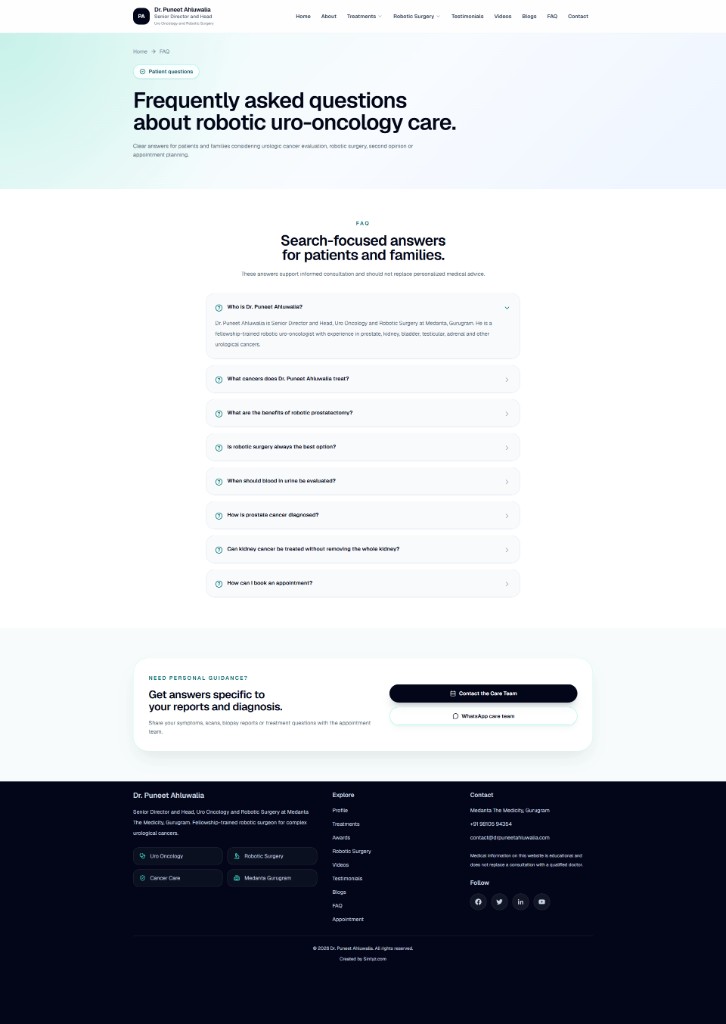
Separate doctor profile, treatments, videos, testimonials, and contact actions so patients can choose their next step quickly.
Structure treatment and specialty content around high-intent search paths instead of a single broad service page.
Keep the frontend lightweight and mobile-first so the site feels fast during patient research.
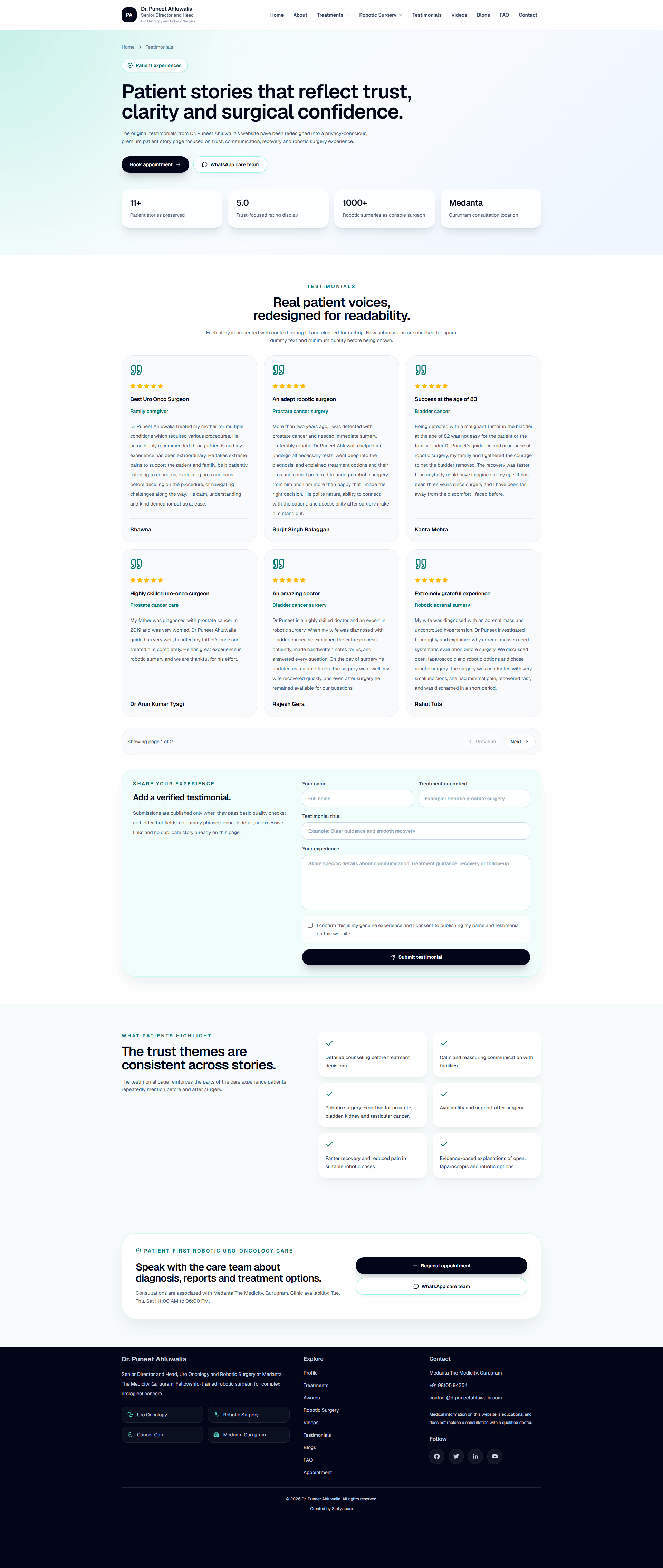
Place credentials, hospital affiliation, treatment focus, patient stories, and review proof near decision points.
A structured profile highlights fellowship training, Medanta affiliation, robotic surgery focus, and clinical credibility without overwhelming patients.
High-intent treatment areas are prepared for dedicated pages that support patient education and search discovery.
Booking, WhatsApp, contact, and report-sharing actions are positioned as clear next steps throughout the patient journey.
The new page structure supports cleaner headings, page-level intent, internal linking, and treatment-specific search readiness.
Clinical credentials, hospital association, patient videos, testimonials, and contact paths are organized for faster trust evaluation.
Patients researching from mobile can reach the most important information and contact actions without unnecessary friction.
Screenshots
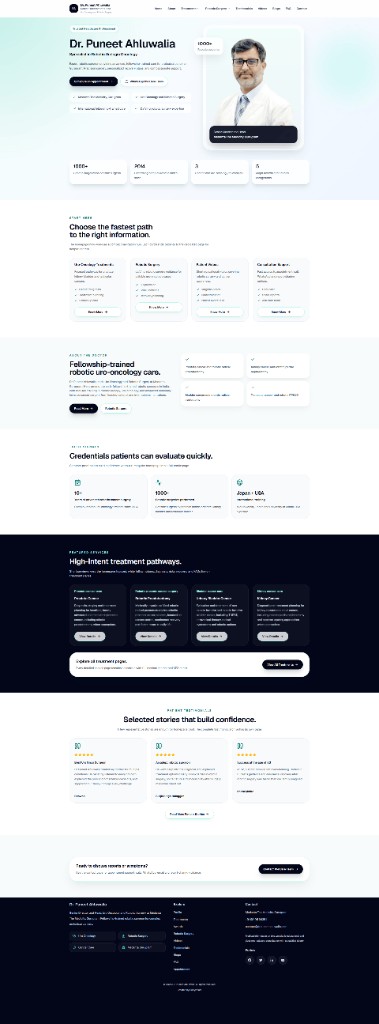 Click to enlarge
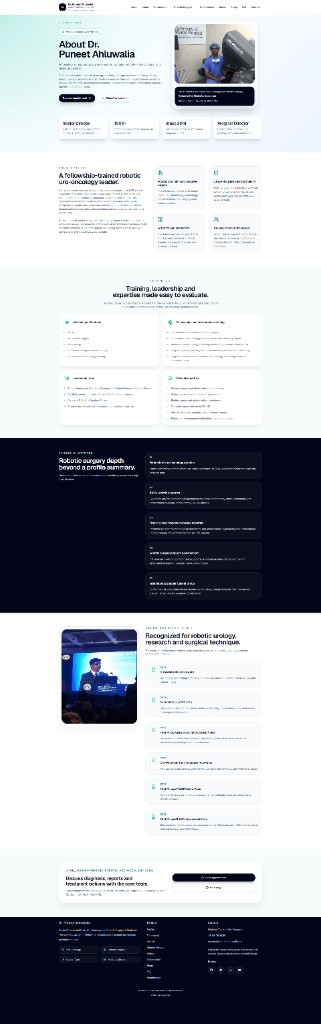 Click to enlarge
 Click to enlarge
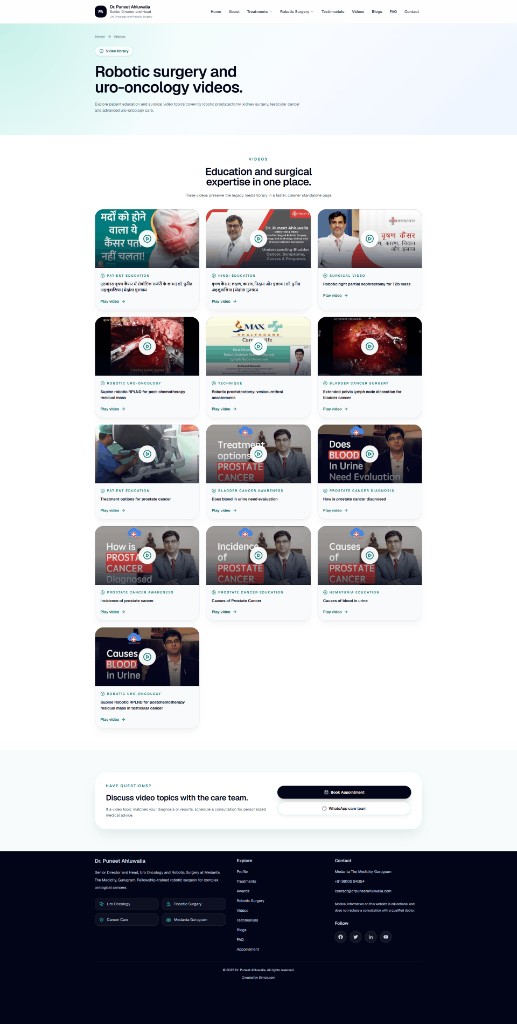 Click to enlarge
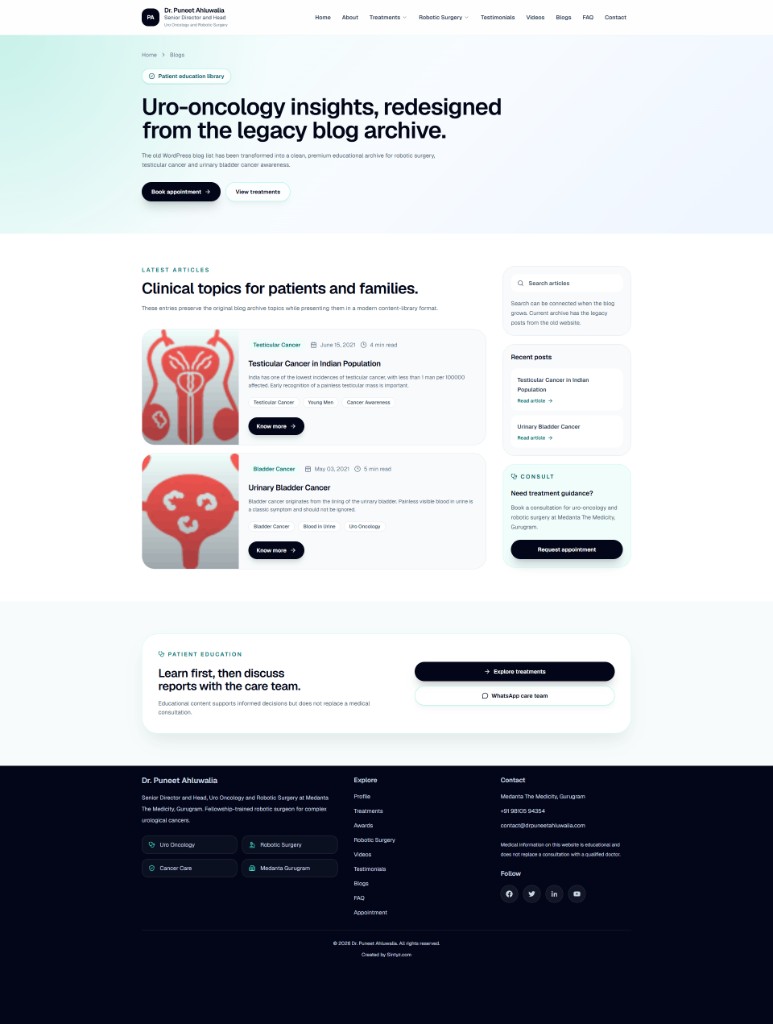 Click to enlarge
 Click to enlarge
 Click to enlarge
Results
Improved UX
Doctor proof and treatment paths are easier to scan.
Stronger Trust
Credentials and specialist focus are more visible.
SEO Ready
Treatment pathways support organic discovery.
Mobile First
Key actions are easier to reach on mobile.
Testimonial
Dr. Puneet Ahluwalia
Senior Director & Head, Uro-Oncology and Robotic Surgery
Medanta – The Medicity
“It was a pleasure working with Sintyz on the development of our website. From the initial discussions through to the final launch, the team was responsive, professional, and easy to collaborate with. They took the time to understand the nature of our medical practice and created a clean, modern website that communicates information clearly and effectively for patients. We are very pleased with the overall design, performance, and user experience. I would like to thank the entire Sintyz team for their dedication, support, and commitment throughout the project. I would be happy to recommend them to fellow doctors, clinics, hospitals, and healthcare professionals looking to establish a strong and professional online presence. Dr. Puneet Ahluwalia Senior Director & Head, Uro-Oncology and Robotic Surgery Medanta – The Medicity, Gurugram Specialist in Robotic Urologic Oncology”
Review date not provided
CTA
Get a Free Growth Report for your clinic, hospital, doctor profile, diagnostic lab, dental practice, or specialist healthcare brand.