Delhi is the anchor healthcare market of North India, where tertiary hospitals, premium specialty clinics, neighborhood doctors, and aggressive digital-first brands compete in the same search journey. Patients in South Delhi, Central Delhi, East Delhi, and West Delhi all use different cues to choose care: some compare reputations and hospital affiliations, some prioritize same-day convenience, and others look for transparent procedure explanations before they trust a provider. That makes healthcare marketing in Delhi less about broad "best doctor" claims and more about matching a clinic's exact strengths to borough-level patient intent, treatment demand, and mobile-first discovery behavior. Search competition in Delhi is shaped by both depth and fragmentation. A single patient looking for a dermatologist, IVF center, dentist, or orthopedic surgeon may see national hospital chains, local super-specialty clinics, aggregator listings, YouTube videos, and Google Maps results before they ever reach an organic website. Clinics that depend only on homepage rankings usually lose to brands that have built dense treatment clusters, strong doctor profile pages, and internal links aligned with the way Delhi residents search by specialty plus locality. Connaught Place, Rohini, Janakpuri, Lajpat Nagar, and Dwarka each behave like separate digital submarkets, so location-specific context is essential for relevance. Delhi's healthcare consumers also place outsized importance on trust proof. They want to know where the doctor trained, whether appointments run on time, what languages the staff speaks, whether insurance or TPAs are accepted, and how easy it is to reach the clinic by metro or car. Generic healthcare websites…
Delhi is the anchor healthcare market of North India, where tertiary hospitals, premium specialty clinics, neighborhood doctors, and aggressive digital-first brands compete in the same search journey. Patients in South Delhi, Central Delhi, East Delhi, and West Delhi all use different cues to choose care: some compare reputations and hospital affiliations, some prioritize same-day convenience, and others look for transparent procedure explanations before they trust a provider. That makes healthcare marketing in Delhi less about broad "best doctor" claims and more about matching a clinic's exact strengths to borough-level patient intent, treatment demand, and mobile-first discovery behavior.
Search competition in Delhi is shaped by both depth and fragmentation. A single patient looking for a dermatologist, IVF center, dentist, or orthopedic surgeon may see national hospital chains, local super-specialty clinics, aggregator listings, YouTube videos, and Google Maps results before they ever reach an organic website. Clinics that depend only on homepage rankings usually lose to brands that have built dense treatment clusters, strong doctor profile pages, and internal links aligned with the way Delhi residents search by specialty plus locality. Connaught Place, Rohini, Janakpuri, Lajpat Nagar, and Dwarka each behave like separate digital submarkets, so location-specific context is essential for relevance.
Delhi's healthcare consumers also place outsized importance on trust proof. They want to know where the doctor trained, whether appointments run on time, what languages the staff speaks, whether insurance or TPAs are accepted, and how easy it is to reach the clinic by metro or car. Generic healthcare websites often fail because they bury these details under marketing copy. A high-performing Delhi clinic site surfaces credentials, treatment pathways, consultation expectations, landmark references, and clear booking options within the first screen or two. For many specialties, especially IVF, dermatology, cosmetic dentistry, and elective procedures, trust is earned before the patient ever clicks "call now."
Google Maps performance in Delhi can be won or lost on operational discipline. Listing categories, service descriptions, review consistency, photo freshness, and accurate hours all influence how frequently patients choose one provider over another in crowded local packs. Because Delhi has intense competition, clinics cannot rely on proximity alone. They need a map listing that reflects their real specialty depth, plus landing pages that explain why a patient from Vasant Kunj, Karol Bagh, or Pitampura should choose them. Reviews also need active stewardship: patients read tone, response quality, and recency as signals of reliability, especially in a market where multiple well-rated alternatives appear side by side.
Another defining feature of Delhi healthcare SEO is multilingual, multi-device research. Patients switch between English medical terms, Hindi phrasing, and symptom-led searches, then compare clinics across mobile, desktop, WhatsApp, and Maps. Many start with broad discovery queries and later narrow to locality, affordability, insurance, or doctor-name searches. A successful Delhi content strategy therefore connects symptom pages, treatment pages, doctor bios, FAQs, and local landing pages into one coherent path. It should reduce uncertainty at every step: explain who the treatment is for, what happens next, how to book, and why the clinic is credible in the Delhi market specifically.
For Sintyz, Delhi represents a market where sophistication matters more than volume alone. The clinics that grow sustainably are not always the ones spending the most on ads; they are the ones with better information architecture, clearer positioning, and stronger conversion journeys. Multi-specialty centers need city-plus-locality pages that avoid duplication, while single-specialty practices need authority hubs around their core procedures. Reporting must track qualified calls, appointment-ready form fills, Maps actions, and high-intent specialty visibility by locality. In Delhi, healthcare digital marketing succeeds when branding, SEO, Maps optimization, and patient trust signals work together rather than as disconnected tactics.
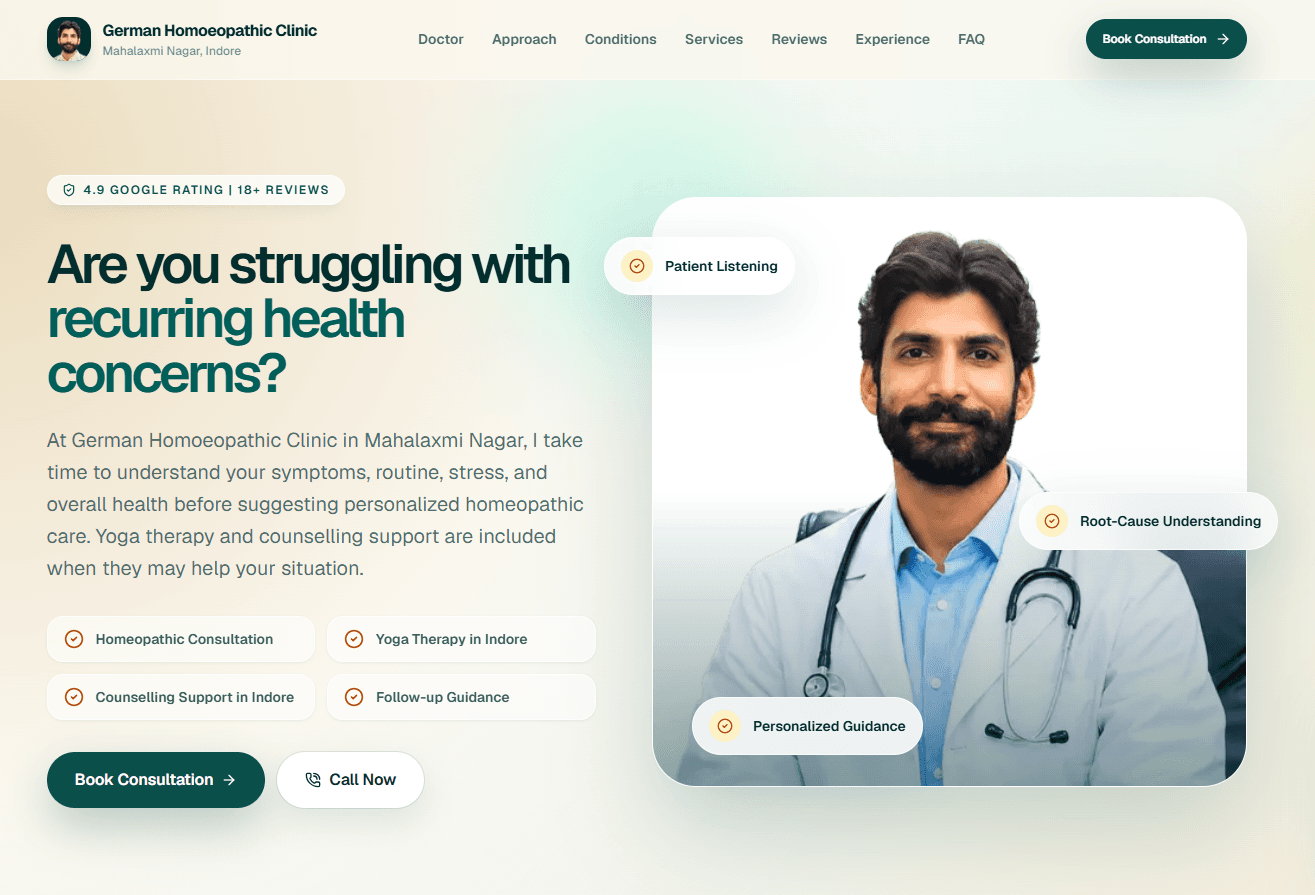
A healthcare digital marketing agency in Delhi has to organize content around both specialty and locality intent. Doctor website design Delhi projects perform best when physician credentials, hospital affiliations, treatment pathways, and nearby landmark context are visible without forcing patients to dig through generic service blocks.
Clinic website design Delhi work should also treat each borough and neighborhood cluster as a distinct search environment. Healthcare SEO Delhi campaigns gain stronger traction when they connect treatment pages, locality pages, and Google Maps signals instead of relying on one homepage to rank for every competitive query.